
Top-Down, Expert-Driven, and Tech-Obsessed
A Primer on High Modernism in the Social Sector

James C. Scott has been one of the primary sources behind Taming the Gift, a project we have been working on for several months, and I sense his thinking deserves some more attention. This piece introduces his thinking on its own terms, for practitioners who may not have encountered it yet.
Most people working in our sector can describe the feeling before they can name the cause. The dashboards that grow more elaborate while the work grows harder. The frameworks that arrive from somewhere else with the confidence of people who have never engaged with the communities you serve. The pressure to translate everything you do into language that satisfies a system you did not create. The sense that the categories meant to capture your work keep missing the part that matters most. None of this is incidental. It is the felt experience of working inside a particular worldview, and the worldview has a name.
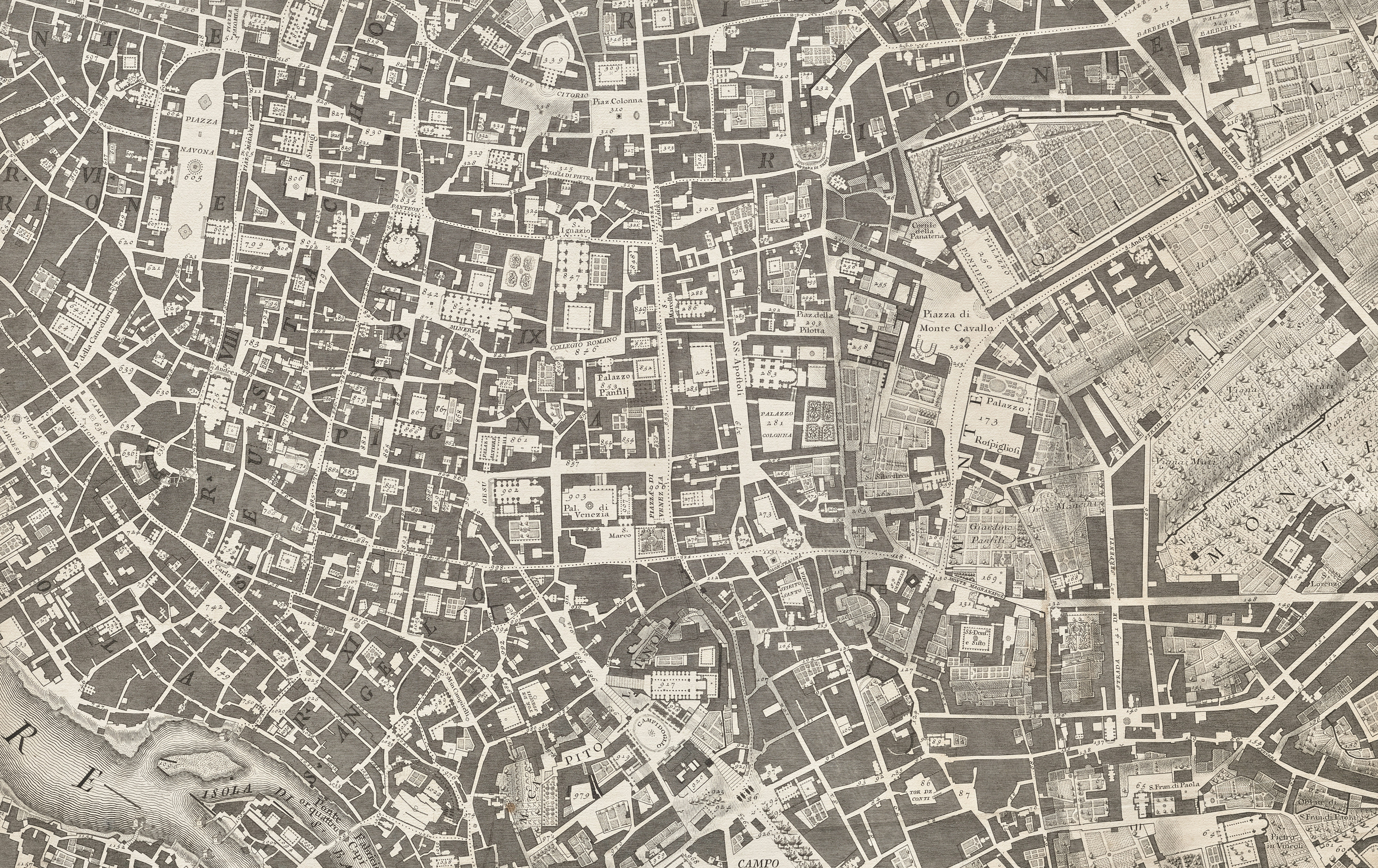
James C. Scott called it high modernism. It is a way of seeing that prefers maps to landscapes and order over complexity. It assumes that the best social arrangements are the ones that can be managed from above with tools that flatten experience into legible units. High modernism is not a strategy or a methodology. It shapes what counts as real before any decision gets made, and once you can see it, you can see it almost everywhere our sector operates.
The Four Marks of High Modernism in the Sector
Once you know what to look for, high modernism is not hard to find. It shows up in four characteristic habits, and most organizations in our sector practice all of them without quite realizing they are practicing anything at all.
The first is legibility. High modernism only trusts what it can see and discounts everything else. In the social sector this becomes the quiet conviction that what cannot be measured cannot be managed, and what cannot eventually be recorded in a database does not really count. Outcomes get reduced to indicators. Relationships get reduced to touchpoints. The slow accumulation of trust in a neighborhood becomes a number of engagements per quarter. None of this is wrong, necessarily. The problem is what gets left out. The conversations that mattered most, the moments when a person decided to stay, the years of presence that finally produced a result no one can quite attribute to a single intervention, these tend to fall through the grid because the grid was not built to hold them.
The second is the preference for expert knowledge over local knowledge. High modernism assumes that the people closest to a problem are the least equipped to understand it, and that real insight arrives from somewhere else: the consultant, the national intermediary, the funder’s program officer, the framework imported from another field. Practitioners learn to wait for permission from people who have never met the families they serve. The local executive director who has been doing this work for twenty years is treated as a delivery mechanism for someone else’s theory of change. There is a particular weariness that comes from being managed by people who know less than you do about the situation in front of you, and much of our sector runs on it.
The third is standardization. If expert knowledge is real knowledge, then what worked in one place should work everywhere, and context becomes friction to be engineered away. This is the logic behind most scaling rhetoric in philanthropy. A program that grew out of a particular neighborhood, with particular people, over a particular stretch of time, gets abstracted into a model, and the model gets rolled out somewhere else with the expectation that the results will follow. When they do not, the failure is attributed to implementation rather than to the original abstraction. The texture that made the thing work in the first place was treated as incidental. It rarely is.
The fourth is faith in technology. High modernism believes that better tools will eventually solve what relationships have not. The donor management system will fix the donor relationship. The new platform will fix the participation problem. The next dashboard will finally make impact visible. Each generation of technology arrives with the promise that this time the apparatus will deliver what the previous apparatus could not, and each generation produces a fresh layer of administrative work for the people who were already doing the actual work. The tools are not the problem. The faith is.
These four habits reinforce each other. Legibility creates the demand for measurement, measurement creates the demand for standardization, standardization creates the authority of expert knowledge, and technology promises to make the whole system finally work. Together they form a worldview that feels like rigor and often produces something closer to its opposite: an organization that knows a great deal about itself on paper and very little about the lives it was built to serve.
How High Modernism Took Hold
High modernism did not emerge accidentally. It grew out of industrialization, scientific management, and the rise of large bureaucratic states that believed they could engineer better societies through planning and rational design. It offered impressive efficiencies and helped build much of the infrastructure that supports our modern world. The achievement is real and worth acknowledging. Roads, public health systems, universal education, modern logistics, none of these would exist without the habit of mind that learned to see populations and territories as objects that could be measured, mapped, and improved.
But the habit, once trained, does not stay where it was useful. It travels. It moves from the places where standardization genuinely serves human flourishing into the places where it quietly undoes it. The same way of seeing that built a postal system gets applied to the work of accompanying a grieving family or rebuilding a neighborhood, and the misfit goes unnoticed because the worldview cannot see its own limits. High modernism trained us to see the world as something to be managed rather than encountered, and that habit has shaped how our sector understands almost everything it does.
What High Modernism Cannot See
The diagnostic question is not whether high modernism produces results. It does. The question is what it filters out before the work even begins.
It cannot see vernacular knowledge, the kind that accumulates in a person who has stayed somewhere long enough to know how things actually work. Scott called this mētis, the practical wisdom that cannot be written down because it lives in judgment, in timing, in the feel of a situation. Every neighborhood has people who hold this kind of knowledge. Almost none of them are invited into the rooms where decisions about the neighborhood get made.
It cannot see trust that grows over time. The grid measures in quarters and fiscal years. The relationships that produce most of what matters in our sector measure in decades. When a system can only see what happens inside its reporting cycle, the long work becomes invisible, and the people doing it learn to translate themselves into the system’s vocabulary or stop being funded.
It cannot see the practices that work because no one has tried to scale them. A small program that serves forty families well is, by the logic of high modernism, a program waiting to be expanded. The possibility that forty is the right number, that the program works precisely because it has not been abstracted from the people running it, does not register as a possibility at all. The grid reads scale as success and modesty as failure, even when the evidence suggests the opposite.
And it cannot see what depends on being unmeasured. Some practices lose their character the moment they become legible. The friend who shows up does not show up better when the showing up is logged. The mentor who has been steady for fifteen years is not made more effective by a dashboard. There are forms of human presence that survive only outside the gaze of systems built to track them, and high modernism, by definition, cannot see them. It can only see their absence after they are gone.
Life Off the Grid
Much of Scott’s work explored communities that lived at the edges of empires and resisted being absorbed into centralized systems. These societies relied on dense networks of reciprocity, mutual aid, and shared obligation. They survived not by rejecting order but by depending on practices that did not require formal control. Their strength came from relationships rather than regulations, which made them resilient in the face of systems that tried to draw them into the grid.
I am not suggesting that our organizations run for the hills or abandon every modern system we rely on. I am suggesting that many of the limitations we feel are self-imposed because we are afraid to operate outside the high modernist worldview. It is outside these walls that we would encounter a richer understanding of the work we are actually doing, and we would not be nearly as panicked about what might come next. We would see more options than the ones our systems currently allow us to imagine.
The reality is that the high modernist grid has been falling apart for some time. And while it has been unraveling, many of us have quietly found small, simple ways of living outside it. These are modest practices, yet they have taught us that we can survive without being fully tied to a system that often lets us down. A better grid will eventually emerge. In the meantime, more of us may have to learn how to live partly outside the old one, and that learning begins with being able to see the grid for what it is.
Further reading
Anyone who finds the diagnosis above useful should go directly to the source. Scott spent his career describing how states and large institutions try to make the world legible to themselves and what happens to human life in the process. Two of his books are essential.
Seeing Like a State: How Certain Schemes to Improve the Human Condition Have Failed (1998) is the foundational text. Scott traces high modernism through scientific forestry, planned cities, collectivized agriculture, and compulsory villagization, showing how the same habit of mind produces the same kinds of failures across radically different settings. The book is long and the examples are dense, but the framework it builds is the one most worth carrying into our work. If you read one book on this subject, read this one.
The Art of Not Being Governed: An Anarchist History of Upland Southeast Asia (2009) is the companion volume and, in some ways, the more hopeful book. Scott turns his attention to the people who have lived at the edges of states for centuries, sustaining themselves through dense networks of reciprocity and shared obligation. It is a study of what becomes possible when human communities are not organized primarily for legibility, and it offers a vocabulary for imagining forms of life that the grid was never able to absorb.
Both books are worth your time. Neither was written for the social sector, which is part of what makes them useful. Scott gives us the language to see our own work from outside it, and that is the best and first move any of us can make.
- Jason Lewis, Partner & Chief Innovation Officer at Seed