
We Forgot How to Be Citizens
It’s not a moral failing. It’s an infrastructure problem. And we can fix it.

Today’s guest contribution is written by Maxine Bedat, the author of Unraveled and founder of New Standard Institute. She writes In the Pursuit... , a Substack on policy, design, and considered living. She is based in Minneapolis.
This essay is an explanation and a rallying cry to a response I get often after writing about housing, childcare, taxes, and the basic things that could make society thrive: I’m busy, and I’m just one voice, what role could I possibly have?
I have been thinking about this comment for a long time, just about my whole career, and the answer is both more straightforward and a lot more powerful than people realize.
The problem is not that modern Americans are too selfish or too busy for democracy. The problem is that most of us were never taught the basic mechanics of civic power, because the institutions that used to teach ordinary people how to exercise that power have collapsed.
This is not a moral failing. It is an infrastructure problem, and the project ahead — which we can absolutely do — is to build it back.
When I first got into advocacy work, I remember having to sheepishly ask the sponsoring legislator for a quick lesson on how a bill becomes law — and I had graduated from an Ivy League law school. I knew constitutional law. I knew corporate law. I did not know, in any practical way, how ordinary people were supposed to move a bill through a state legislature.
So when someone reads a piece about why childcare costs as much as a mortgage and asks what they can do, the truthful answer requires going back about a hundred years and learning what civic life looked like before. Not because we can simply return to that world — we cannot and should not — but because it helps us see what is missing now, and what we need to build.
What civic life used to be
When the French political thinker Alexis de Tocqueville traveled through the United States in the 1830s, what astonished him most was not American democracy in the formal sense — the elections, the legislatures, the Constitution — but what he called the “art of association.” Americans, he observed, formed groups for everything: religious groups, moral groups, commercial groups, reform groups, groups to build churches, hospitals, schools, and prisons. As he said,
“Wherever, at the head of some new undertaking, you see the government in France, or a man of rank in England, in the United States you will be sure to find an association.”
When I started looking more closely at this history, I was astonished by how central these groups once were to ordinary American life. These fantastically named organizations — the Fraternal Order of Eagles, the Loyal Order of Moose, the Independent Order of Odd Fellows, the Grange, the Knights of Pythias, the Prince Hall Masons — had hundreds of thousands or millions of members. Americans in the mid-1920s belonged, on average, to three or four such organizations. Civic participation wasn’t a virtue requiring unusual energy, these were not people who called themselves advocates, it was just the default condition of adult life.
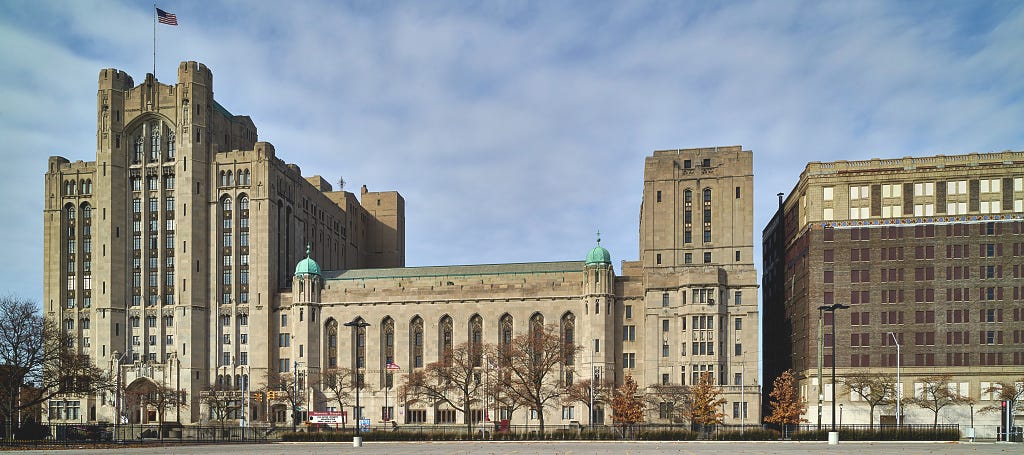
The structure mattered as much as the size. These organizations were federated, meaning local chapters aggregated into state and national bodies that could act in concert. And, really importantly, they were dues-based, meaning members paid in and had standing to demand things. They were also, within their own exclusions, often cross-class, meaning the bank president and the railroad worker might sit in the same lodge room and know each other by name. Can you think of any spaces today, besides the subway, where different classes regularly interact, let alone make collective decisions?
They also had leadership pipelines — local officer to district officer to state officer to national — that produced political talent across class lines. And they had a civic identity, not a single-issue identity, which gave them durability and flexibility to take on big issues.
This world was also deeply unequal, I can’t deny. Many of these organizations were segregated by race, gender, religion, or all three. White fraternal orders excluded Black members; Black Americans built parallel federations because they had to. White Protestant orders often excluded Jews and Catholics, who in turn built their own powerful institutions. Men’s orders excluded women, who built their own clubs, auxiliaries, and federations. Civic life at the time also depended, in part, on a household structure in which one adult, usually a man, had evening time available because another adult, usually a woman, was at home doing the domestic labor that made his public life possible.
So this is not a golden age to which we can return wholesale. Still, there was an enormous, dense, participatory civic infrastructure, and most adults were embedded in some piece of it.
That infrastructure did not just give people somewhere to go on a Tuesday night. It taught them how power worked, and it achieved huge things.
What it achieved
Social Security did not emerge from nowhere. It was made politically possible, in part, from these kinds of organizations. The Fraternal Order of Eagles passed a resolution calling for federal old-age pensions in 1921, more than a decade before Franklin Roosevelt signed Social Security into law. The Townsend Clubs, with thousands of local chapters meeting in church basements and Grange halls, generated millions of petition signatures and made old-age security a national political demand. The GI Bill, one of the most consequential pieces of social legislation in American history, was pushed by the American Legion. Child labor laws — the idea that children should be in school rather than factories — were advanced by generations of organizing through women’s clubs, labor unions, consumer leagues, and reform associations.
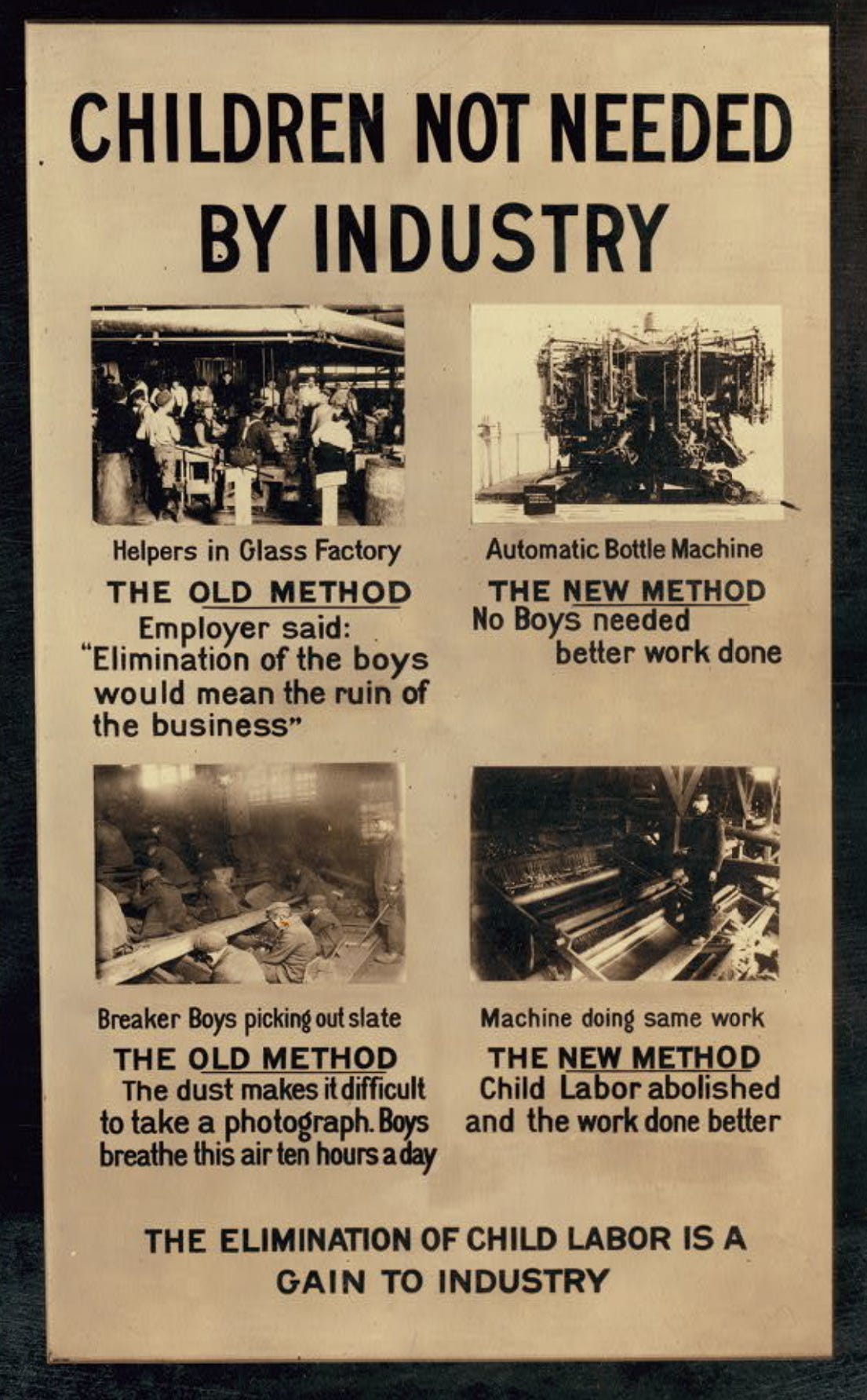
This is the background we now take for granted. Social Security keeps millions of Americans out of poverty every year. The GI Bill reshaped the postwar middle class. None of it was inevitable. It was built by everyday Americans who belonged to something, paid dues to something, showed up somewhere, and learned how to make demands together on the things that shaped their lives.
That is the part we have lost.
What changed
The civic infrastructure with all those cool names collapsed in the second half of the twentieth century. Several things happened at once, many of them good and needed.
The welfare state, partly built by the federations themselves, took over many of the insurance functions that had given fraternal orders their immediate economic rationale. Social Security replaced some of the need for fraternal old-age benefits. Unemployment insurance, workers’ compensation, and commercial life insurance became more widely available. The dues stopped buying something you could not get elsewhere, often more cheaply.
Suburbs scattered people across distances that made weekly evening meetings harder to attend. Television gave people something else to do after dinner. Women’s entry into paid work — which I am, as a working mother, personally grateful for — reduced the supply of unpaid evening labor that had sustained women’s clubs and the men’s organizations that depended on women managing the home. Civil rights made racially exclusive orders untenable, and many white orders contracted rather than truly integrate.
But something else happened too. Professional advocacy organizations replaced the membership federation. Foundations (which appeared from the vast wealth that was generated with industrialization) and direct mail made it possible to run policy campaigns without dues-paying members. These organizations can do important work, but they do not, for the most part, generate civic muscle.
Membership became superficial. You join an organization, and they send you a tote bag, a calendar, and an appeal letter every six weeks. There is no meeting, no relationship with other members, no vote on leadership, no obligation. There is, in the end, no real membership at all — just a recurring donation with a brand attached.
The participation numbers tell the rest of the story. PTA membership is far below its peak. Union density has fallen from roughly a third of the workforce to about a tenth. The fraternal orders that remain are mostly shells of their former selves. The civic substrate that once made political demands durable has been hollowed out almost everywhere.
What this has cost us
When citizens have no organized capacity to make demands on their representatives, representatives respond to whoever does. That is often organized money. It is also, increasingly, the cultural-attention economy that punishes politicians for being on the wrong side of whatever symbolic fight is dominating the news cycle that week.
Legislators take up the hot-button issues that travel on social media and through partisan media ecosystems. They are much less likely to do the patient, technical, unglamorous, and what should be bipartisan work on the issues that actually shape people’s daily lives: the cost and availability of childcare, housing, healthcare and eldercare; the structure of the tax code; the regulation of AI; the financing of public schools. This is exactly the work that old federations were built to do, and that the contemporary advocacy ecosystem struggles to sustain.
The result is a politics where the things that get attention are often symbolic, and the things that get done are often the work of whoever shows up. Usually, that means lobbyists. But organized people have more power against organized money than we realize. The Congressional Management Foundation has been surveying congressional staff for decades, and its finding, again and again, is that an in-person visit from a constituent, not a paid lobbyist, is one of the most influential forms of contact for an undecided lawmaker. The catch is that very few constituents show up.
I’ve seen this up close. A bill my colleagues and I have been working on for several years which would put basic environmental guardrails in place for the apparel industry has not passed – yet – because not enough people are showing up to say this is needed, while the industry has organized against it. In California, just as the bill was set to advance, the industry sent in their paid lobbyists, which killed the bill this session. If even a fraction of the folks buying “sustainable clothing” called their representative instead, the bill would be long passed.
There is also a related cost. The dominant mode of thoughtful liberal conversation has become a kind of perpetual analysis that substitutes for participation. Long podcasts, explanatory journalism, policy-curious newsletters — I read and listen to a lot of it, and they are informative. But the form itself teaches us to be people who understand things, not people who do something about them.
Ezra Klein’s recent interview with the Buddhist teacher Pema Chödrön is the purest expression of this. It is a long discussion of how to sit with discomfort, agree with fear, and become intimate with suffering. Her teachings are deeply important, but the domain she covers is private suffering: the unchosen losses of being alive. It is not the cost of childcare, or the steady dismantling of the conditions of a livable life. What we need is understanding and acceptance for personal losses, and the normalization of engaging our political voices for structural ones.
The podcast does not end with a meeting to attend, it ends with three more books to read. The well-informed liberal audience becomes a community of spectators with excellent vocabulary, watching things happen to a country we are nominally citizens of.
There is also a second cost. People are isolated and lonely. I am not saying anything new there. But what we have not connected clearly enough is that our hunger for connection and our hunger for public purpose are related. We are not only lonely for friends. We suffer from a lack of purpose larger than ourselves and our own households.
The federated organizations that once gave people a place to know their neighbors as public actors, and a sense that they were part of something larger than their private lives, are mostly gone. The loneliness epidemic and the civic collapse are not identical, but they are intertwined. We are starved for connection, and we are starved for agency. We are starved for places where we can be known by name and also do something that matters.
The way forward
I have spent most of this essay describing what we lost. I want to spend the rest describing what we can build, because the situation is more hopeful than the diagnosis suggests. The question I started with — what am I supposed to actually do? — has concrete answers.
The first thing to say is that the model still works. Showing up through some local chapter, coalition, parent group, tenant association, school board campaign, or statehouse network is not a relic. Where people are doing it, it still produces results.
Indivisible chapters, formed from a Google Doc after the 2016 election, helped make town halls politically painful for vulnerable Republicans during the fight over ACA repeal. Moms Demand Action, started by an Indiana mother on Facebook the day after Sandy Hook, built a national network of ordinary people who show up at hearings, call lawmakers, and organize state by state. These are not perfect analogues to the old federations, but they prove the same basic point: organized people, acting together over time, can still change what politicians do.
Mothers, in particular, have been one of the most reliably effective organizing constituencies in American history. This should not mean mothers have to carry yet another unpaid social burden. It means that when parents organize from the moral authority of care, they have historically been hard to ignore.
So what does civic action look like for ordinary participants? It is not as heavy of a lift, and it does not require the heroics that the mythology around political change suggests.
It is showing up to a school board candidate forum on a Tuesday evening with three other parents you know only slightly. It is texting voters from your couch during your kid’s screen time on a Saturday. It is calling your state representative’s office on your lunch break and saying who you are, what district you live in, and why a bill matters to you.
None of this is heroism. Most of the people doing it would not describe themselves as activists. They are people who decided to do one specific small thing, through one specific organization, repeatedly, over time.
And the evidence that it works is stronger than people realize. One of the best field experiments we have, by Daniel Bergan and Richard Cole, found that targeted constituent phone calls increased the probability that a legislator would support the relevant bill by about twelve percentage points.
Participation produces us
The thing I keep coming back to is that participation does not only produce political outcomes. Participation produces us.
The Eagles lodge did not just lobby for Social Security. It gave its members a network of relationships across class lines, a pathway to leadership, a place to be known by name, a sense that they were part of something larger than their own household. Women’s clubs did not just advocate for child labor laws or public health measures. They gave women civic authority in a society that denied them formal political power for much of its history. Black fraternal orders and churches did not just serve as parallel institutions under segregation. They became engines of leadership, mutual aid, and political transformation.
These relationships and the sense of belonging were not a side benefit of the political work. They were what made the political work possible. They were also part of what made a life feel connected and full.
We are starved for this, badly. The loneliness, the loss of purpose, the sense of watching things happen to us rather than participating in them — these are reported back in survey after survey, but they are also visible in ordinary conversation. People feel acted upon. They feel governed by forces they cannot see and cannot reach.
Showing up to a meeting on a Tuesday night is not just a political act. It is a way of refusing the conditions that make us feel as powerless as we feel.
So where do you go?
The harder question is institutional. The Tuesday-night lodge is not coming back. The dues-based mass federation built on burial insurance is not coming back either (though I think we can think creatively of how we can rebuild modern versions of even these type of third spaces). In the meantime, what exists is a patchwork, but it’s not nothing. Across almost every issue I have written about in this newsletter, there is already a national, state, or local organization doing the work, with a way for ordinary people to plug in.
You do not have to create the spaces. Part of what I am trying to do with this newsletter is the homework of locating the organizations, so you don’t have to. But we do have to join.
Pick the issue that bothers you most. Housing. Childcare. Schools. Phones. Taxes. Climate. Elder care. Join the group. Make one call. Bring one person. Just pick one door and walk through it.
Showing up in favor of something — affordable housing, paid family leave, a phone-free school policy, a fairer tax structure, basic environmental rules — is often as simple as standing up and saying who you are, what district you live in, and that you support the proposal.
Most people never imagine doing this. It is one of the highest-leverage things a citizen can do.
Find one room. Go once. Bring one friend. Then go again.
That is not everything democracy requires. But it is how we will move forward. And your actions matter.
- Maxine Bedat , Guest Contributor
 | A guest post by
|
Many great insights - thank you.